Have you ever taken a moment to ponder the captivating identity of Southeast Asia, particularly when it comes to its mesmerizing art and cultural heritage?
I hope that amidst the profound impact of massive inter-cultural relations which the globalization era offers, the cultural essence of the SEA region remains recognizable and deeply-rooted within us.
The traditional dance, or renowned as Folk dance, is a form of dance that is deeply rooted in the cultural traditions and practices of a particular region or community. It is typically performed by a group of people who convey the values, customs, and beliefs of their culture through rhythmic movements, folk music, and costumes, and are performed during various communal occasions and cultural events to celebrate cultural identity.
As a proud Southeast Asian, and the folk dancer who has been enjoying to dance the traditional genres almost in whole life, this writing will be aiming to explore some of the most well-known folk dances in the Southeast Asia cultures, and to understand the stories they convey as an attempt of celebrating, and preserving, the region’s unique cultural heritage.
Starting with the Brunei Darussalam, the Adai-Adai dance is a significant Bruneian folk dance that portrays the traditional way of life in Brunei’s water villages. The dance highlights the importance of fishing, which was the primary source of livelihood for Bruneian in the past. The inspiration behind the Adai-Adai dance comes from the fact that mobility in the water villages in the olden days relied heavily on paddling boats. Therefore, if you might have a chance to watch the performance, you will notice that the Adai-Adai dance mimics the movement of a person paddling a boat with an oar.
The Adai-Adai dance is performed in a group of dancers, comprises of males and females, where the dancers move in a circular motion while waving scarves and stepping in time to the music. The dance has its origin in a ceremonial dance practice where women in Brunei would perform to welcome their husbands after a long journey. The Adai-Adai dance is still prevalent in Brunei and is usually performed on special occasions such as weddings and festivals.
Today, the dance is often held to welcome dignitaries to the country. The Adai-Adai dance has evolved over the years, but it remains an essential part of Brunei’s cultural heritage and a testament to the country’s rich history.
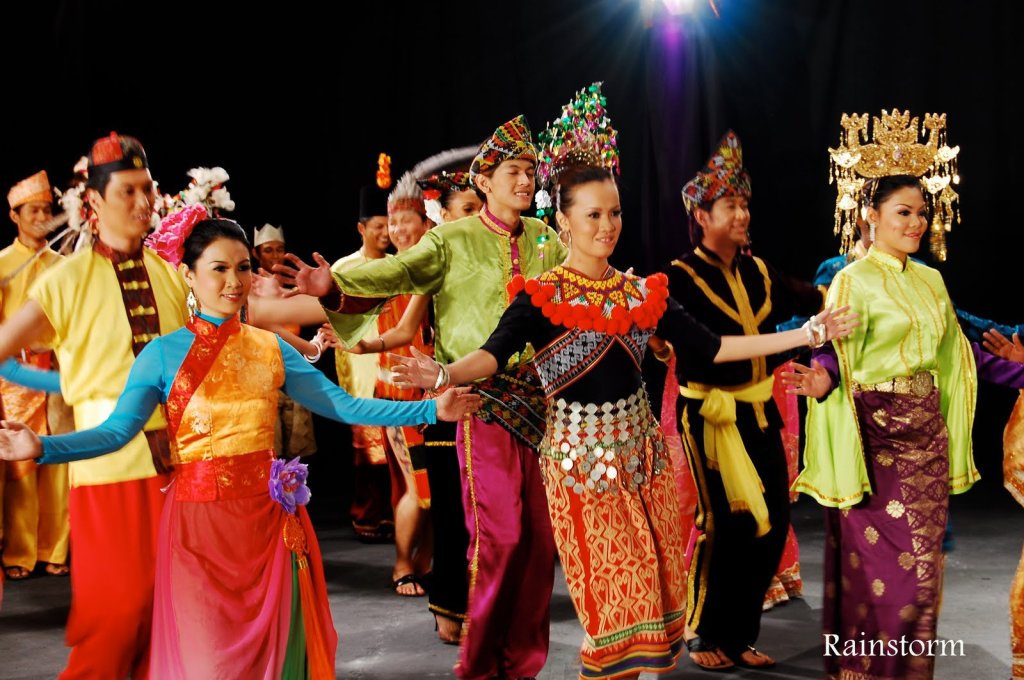
Credit: Adai Adai Dance, Dictio Community
The Apsara dance, also knows as the Royal Ballet of Cambodia, is a highly respected form of art that is synonymous with Cambodia’s classical dance tradition. Its rich history is intimately associated with the Khmer court and has been passed down for over a thousand years. Originally, the dance was exclusively accessible to royal court members and was viewed as a highly-stylized form of royal folk art. The Angkor kings themselves are said to have housed over 3,000 Apsara dancers in their royal courts during the height of the Khmer Empire in the 12th century.
Despite historical accounts suggesting that the Apsara dance has been associated with the Khmer court for over a thousand years, some sources argue that the dance has existed even earlier, during the 6th and 7th centuries. Nevertheless, the Apsara dance has become a significant component of Cambodia’s national heritage and has been celebrated throughout the country’s history.
The Apsara dance is exclusively performed by female dancers and is a visual representation of the apsaras, or celestial nymphs, who descended from heaven to entertain and delight mortals. The dancers move gracefully and modestly, yet also with an agility and poise that is truly captivating, characterized by its intricate hand gestures, or mudras. In this dance form, hand gestures are used to convey a wide range of emotions, ideas, and stories, and they are closely tied to nature, mythology, and daily life.
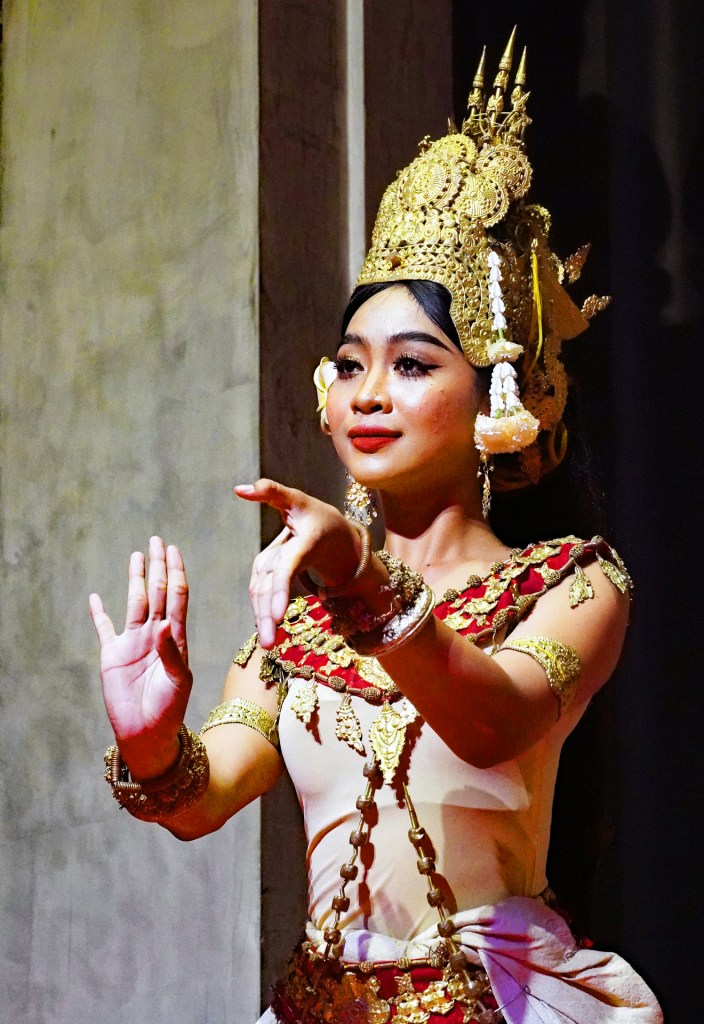
It is said that there are more than 1,500 hand gestures in the Apsara dance, each with a specific meaning and purpose. These gestures are highly detailed and precise, and every movement of the fingers is meant to convey a particular idea or emotion. For example, some hand gestures in the Apsara dance are used to represent aspects of nature, such as the lotus flower, the sun, the moon, and the stars. Other hand gestures are used to convey specific emotions, such as love, joy, anger, and sadness.
Their elaborate costumes, headpieces, and accessories are also beautifully stunning inspired by the carvings found on the walls of the majestic Angkor Wat. The Apsara dance is a celebration of Cambodia’s rich cultural heritage and honors the country’s ancient history. It represents a symbol of national pride and identity and is regarded as a crucial element of Cambodia’s cultural legacy. Even today, the Apsara dance remains an essential aspect of Cambodia’s artistic and cultural heritage, cherished and admired by people from all over the world.
Indonesia is a country that boasts a rich cultural heritage, with a diverse tradition of folk dances. One of the most renowned folk dances that are highly popular is called Tari Saman. This dance originated from Aceh province, and is considered to be one of the most captivating and intriguing folk dances in Indonesia.
The Tari Saman dance is a group performance, with dancers sitting in a circle and performing a series of complex hand movements, which include slapping their chests, thighs, and the ground, clicking their fingers, swaying, and twisting their bodies and heads in time with the shifting rhythm. Additionally, they chant and sing songs with poems containing praise to God almighty, while performing the dance. Initially, this dance was regarded as a folk game and conducted as part of religious activity in the mosque area. The dance was performed as part of a prayer aptly called Pok Ane, with the songs containing religious undertones. However, as time went by, the dance became more than just a religious activity. It was also practiced as a way of enhancing the spirit of the people of Aceh in war conflict and welcoming home soldiers.
The Tari Saman dance is not only a form of spiritual and cultural expression, but it also explicitly reflects the unique daily lives of the Gayonese people and their natural environment. This dance is also a way to commemorate important religious events in the customary culture of Aceh people, such as the birth of the Prophet Muhammad.
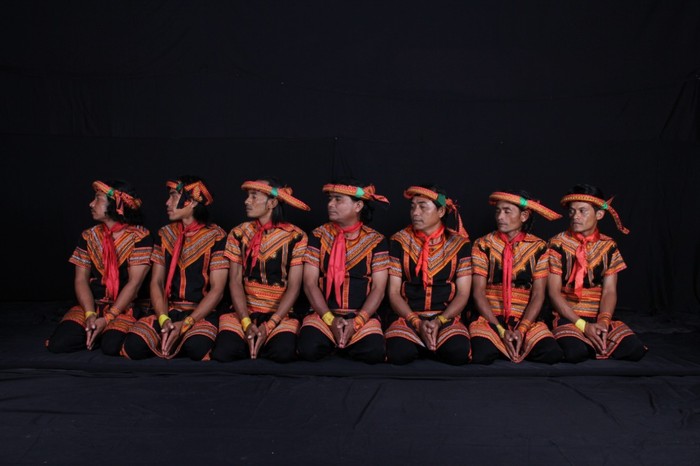
Credit: Saman Dance, Duta Saman Indonesia
The Tari Saman dance has since evolved into a way of celebrating community, identity, and cultural values. Nowadays, it has become a regular feature in festivals and state inaugurations, where it is performed to showcase Indonesia’s rich cultural heritage. It has become a symbol of national pride and a way of showcasing the unique cultural diversity of Indonesia to the world.
The Lam Vong, also known as the “Circle Dance,” is one of the most popular folkloric dances in the Lao PDR. This beautiful and joyful dance is typically performed during festive occasions and social gatherings, where it tells foundational stories and emphasizes the nationalistic pride of the country. The Lam Vong is a slow revolving circle dance, where men form a circle on the outside, and women form a circle on the inside. They cheer together with graceful hand movements and simple footsteps, creating a mesmerizing sight.
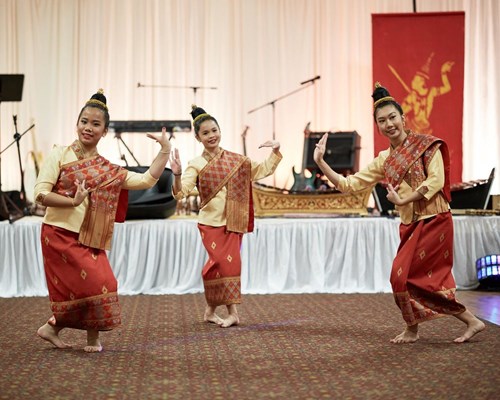
Credit: Lam Vong Dance, Phoenix Voyage
Before the dance starts, there is a formal greeting where the man and woman bow with their hands joined together as a sign of respect for each other. The dance involves moving in a circular pattern, holding hands, and swaying to the rhythmic beats of musical instruments like the Khaen, a bamboo flute, and Saw, a traditional fiddle. The musical instruments add a beautiful and melodic touch to the dance, creating an enchanting and relaxing atmosphere. The circular pattern of the dance is symbolic of the cycle of life and the interconnectedness of individuals within a community.
The Lam Vong is not only a way of celebrating life but also a way of celebrating the community’s values of togetherness and harmony. The Lam Vong dance is an important cultural tradition that has been passed down from generation to generation in the Lao PDR. It is a way of preserving the country’s rich cultural heritage and showcasing it to the world.
This dance has become a symbol of national identity and pride and is often performed at international events and cultural festivals to represent the Lao PDR’s unique cultural diversity.
Known as Asia’s melting pot country, Malaysia boasts a diverse range of folk dances, which are reflected in its rich and vibrant folk dances. One of the most popular Malaysian folk dances is the Joget dance, which has its roots in the Portuguese folk dance that was introduced during the colonial era.
The Joget dance is a lively and energetic dance that incorporates fast footwork, hip-swaying movements, and upbeat music. The dance is typically performed in pairs, with male and female dancers, and their movements suggest teasing and playing between partners, although, as with other traditional dance forms, they never touch each other. At the end of a Joget performance, the drumming speeds up to a rapid dance section, during which two dancers face each other and extend their legs forward until their feet touch before switching legs.
The Joget dance is mainly performed for social gatherings such as weddings, cultural festivals, and other joyous events. The beat is lively, and the music promotes social bonding amongst the villagers, inviting the listeners to take a step forward and dance. The Joget dance is not only a way of preserving and showcasing the Malay culture and heritage, but it is also a way of promoting unity and social cohesion among the people.
The dance symbolizes the cultural fusion that exists in Malaysia, where different cultures and traditions coexist harmoniously, and it is a perfect example of how cultural exchange can lead to a unique and beautiful expression of art.

Credit: Joget Dance, Pinterest
The dance is a celebration of the Malay community’s cultural richness and diversity, a testament to their resilience and adaptability in embracing foreign cultures while retaining their own unique identity.
Zat Pwe is an alluring classical form of dance-drama that has garnered immense popularity among the Burmese people. It is deeply rooted in the traditions of Myanmar and has a distinctive character that makes it stand out from other performance arts. The performance often includes sung passages, adding to the overall experience. With its origins dating back to the late 1800s, Zat Pwe has been an integral part of Burmese culture and continues to be so in the present day. It is an all-night outdoor performance that presents a panoply of music, song, dance, drama, and comedy, all led by a male stage star known as a mintha, accompanied by his female counterpart, a minthamee.
The performers don elaborate costumes with flowered headdresses, pearl chokers, floral garlands, and long pink skirts with gleaming threads, adding a visual appeal to the performance. They are accompanied by a live percussion and gong ensemble that enhances the overall experience.
The format of Zat-pwe was modeled on marionette theater, also known as yok thay pwe, and became the human expression of marionettes dramatizing the Jataka tales. The marionettes were the dramatic characters narrating the Buddhist Jatakas in both the royal court. Over time, Zat-pwe has blended cultural and historical elements gathered from a variety of sources. These elements range from the legacies of dance in the old royal courts to contemporary dramatic plays addressing social issues.
As a living tradition, Zat-pwe seamlessly incorporates elements of both old and new influences, reflecting the breadth of Myanmar culture. It is a vibrant and dynamic expression of Burmese culture that showcases the country’s artistic and creative talent while providing a platform for social commentary and entertainment. Zat-pwe is an essential part of Myanmar’s cultural identity, demonstrating the enduring relevance and appeal of this unique form of performance art. Its popularity and significance in Burmese culture demonstrate the enduring relevance and appeal of this unique form of performance art.
The most popular Philippines’ folk dance is called The Tinikling, which is named after the long-legged bird named tikling bird. The Tinikling dance is said to have originated from the movements of birds dodging bamboo traps set by farmers, and over time, it evolved into an intricate dance form. The Tinikling dance is traditionally performed by a pair of dancers with two poles. However, other variations of the dance incorporate up to four poles. At the commencement of the dance, the dancers will position their hands on their hips or clasp them behind their backs. As the tempo of the music accelerates, the rhythm of the poles intensifies, causing the dancers to gradually draw closer and grasp each other’s hands. To avoid the risk of entangling their ankles in between the poles, the dancers must pay close attention to the music’s rhythm. Furthermore, all performers engaging in the Tinikling must be barefooted, emphasizing the dance’s authenticity.
Meanwhile, the clappers, or those responsible for gripping and maneuvering the bamboo poles, initiate the rhythmic play by tapping the poles against the ground twice before clapping them together on the third count. This sequence is then repeated as consistently as possible, without lifting the poles too high, which could disrupt the dancers’ hopping motion.
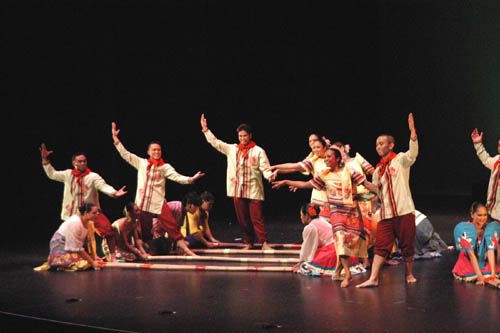
Credit: The Tinikling, Skyscraper City
The Tinikling dance is an intricate and fascinating art form that requires intense focus and coordination between performers. The incorporation of bamboo poles adds an element of complexity and requires precise rhythmic movements to execute successfully. The Tinikling dance is not only a symbol of the Philippines’ natural beauty but also a representation of the country’s resourcefulness and resilience.
Singapore, a melting pot of cultures and ethnicities in Southeast Asia, has a unique history when it comes to dance as an art form. The country celebrates its cultural diversity by incorporating various traditions, including Chinese, Malay, Indian, and others, resulting in an impressive and expressive range of dance forms. The dances of Singapore serve as a reflection of the diverse backgrounds of its people, creating a distinct and homogenous cultural identity.
One of the notable folk dances of Singapore, inspired by the Malay-Chinese ethnicity, is the Peranakan dance. The Peranakan-Dondang Sayang is a traditional poetic dance that is associated with the Malay and Peranakan ethnic groups of Singapore. It is performed during various ceremonial occasions such as wedding dinners, birthdays, and anniversaries.
The dance is accompanied by Dondang singing styles, which involve the singing of pantun, or four-line verses, complemented by a small orchestra of musicians playing the violin, traditional Malay hand drums (Rebana), and gong. The musical ensemble is primarily accompanied by guitars, western drums, an accordion, tambourine, and a flute. During the performance, the dancers dress in floral ensembles, and their footwear is influenced by Peranakan porcelain and Malaysian batik sarongs, which adds to the visual appeal of the dance.
Among other Southeast Asia’s countries, Thailand is well-known for its elegant and graceful dance forms, with the traditional Thai dance, named Khon, being one of the most famous. Khon is a traditional dance form from Thailand that originated in the royal courts during the Ayutthaya period (1350-1767).
It is a form of dance-drama that combines intricate choreography, music, and storytelling. The Khon dance is typically performed by a troupe of dancers who wear elaborate costumes and masks with the complex hand gestures, footwork, and body movements, depicting characters from the Ramakien, the Thai version of the Indian epic, Ramayana. The dance is performed to the accompaniment of traditional Thai music, including drums, cymbals, and wind instruments.

Credit: Khon Dance, Pinterest
One of the unique features of the Khon dance is the elaborate masks worn by the performers. The masks are made of lightweight materials such as papier-mâché and are painted with intricate designs. Each mask is designed to represent a specific character from the Ramakien, such as Hanuman, the monkey god, or Ravana, the demon king.
The Khon dance is not only a form of entertainment but also a way of preserving Thailand’s cultural heritage. The dance has been performed for centuries and has been recognized as a national cultural treasure. In addition to its cultural significance, the Khon dance has also been recognized for its artistic merit. The intricate choreography, elaborate costumes, and expressive masks have earned the Khon dance a place on the UNESCO Intangible Cultural Heritage list.
Vietnam‘s rich tradition of folk dances has been a significant part of the country’s culture and heritage for centuries. Each region of the country has its unique style of dance, reflecting the diversity and richness of Vietnam’s culture. One of the most well-known dances in Vietnam is the Bell dance, commonly known as an integral part of the sacred rituals of the Dzao people in Hoa Binh province.
Bell dancing requires the participation of at least three pairs of men and women, though larger groups are also common. The dancers hold thin bamboo sticks in their left hands and bells in their right hands, which they use to count the beat according to the guidance of the conductor. When the dance take place, the performers sing old songs that simulate the process of making a living on new land, getting married, and giving birth to children in each family.
The Bell dance is one of the few traditional Vietnamese dances that uses a small bronze bell as the main prop, accompanied by other auxiliary props such as drums, erhu, and flute, to form rhythmic and vibrant music. The combination of these elements creates an energetic and lively dance, imbued with the cultural significance of the Dzao people of Hoa Binh province, Vietnam.
Another popular dance in Vietnam is the Lion Dance, which is performed during the Lunar New Year celebrations. The dance involves two performers who don a lion costume and perform a series of acrobatic movements and gestures to the beat of the drums. The Lion Dance is believed to bring good luck and fortune to the community and is a way of warding off evil spirits. The dance is a unique blend of art, culture, and tradition, showcasing Vietnam’s vibrant and lively culture. The Lion Dance has become an important part of Vietnamese folklore and is a way of promoting harmony, prosperity, and unity within the community.
In conclusion, the Southeast Asia region boasts a rich tapestry of diverse folk dance genres. It is incumbent upon us to diligently preserve and protect these invaluable cultural treasures, as they constitute an integral part of the identity and heritage of the Southeast Asian people.
By recognizing the significance of these folk dances and taking active measures to safeguard their existence, we can ensure that future generations will continue to revel in the vibrant beauty and diversity that these dances represent.
 SEA Folklore
Leave a comment