
The dragon, a mythical and legendary being, holds a significant place in the folk traditions of various cultures worldwide. Divergent perspectives on dragons emerge across regions. In the Western depictions, since the High Middle Ages, dragons often been associated as creatures adorned with wings, horns, and the capacity to emit fire. While in the Eastern cultures, dragons are typically represented as wingless, four-legged, serpentine entities distinguished by their heightened intelligence.
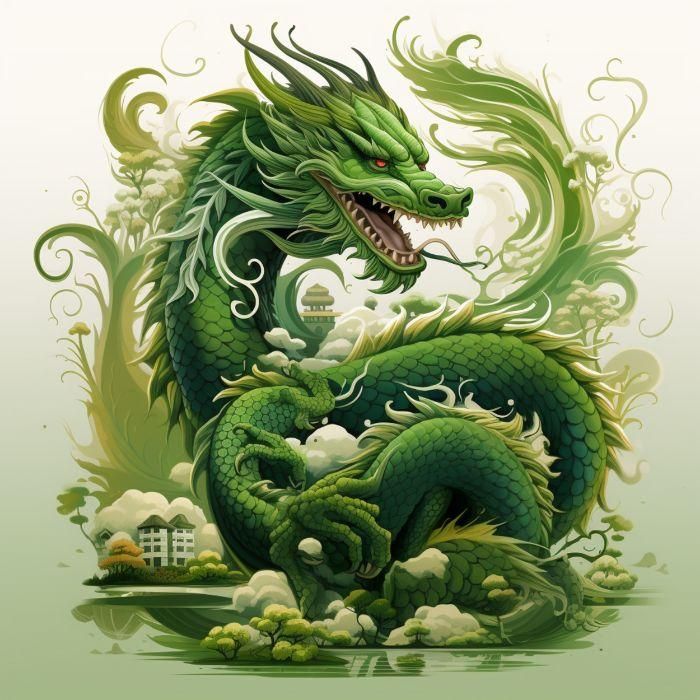
The legendary odyssey of dragons has left an indelible mark on the tapestry of Southeast Asia’s folktales.
Within the rich cultural narratives of this region, dragon-like entities assume pivotal roles in enriching local legends. A summary of the dragons’ mythology and folktales from diverse sources across the region is presented below.
Happy Reading!
THE LEGEND OF HA LONG BAY – VIET NAM
(source: https://gohalong.vn/the-legend-of-halong-bay/)
Once upon a time, centuries ago, during the nascent formation of Vietnam, the region confronted persistent threats of intrusion from formidable northern powers. Although the rugged topography shielded Vietnam’s northern boundaries, the eastern coastal areas remained susceptible to potential attacks.
Witnessing the adversities faced by the Vietnamese populace, Ngoc Hoang, the sovereign of the celestial realm and the Jade Emperor, dispatched a family of dragons – the Mother Dragon and her offspring – to aid and safeguard the Vietnamese populace and their evolving civilization.
On a particular day, as the Vietnamese military assembled along the mainland coast, positioned with a naval fleet prepared in the East Sea to thwart an imminent invasion, the dragons descended from the heavens to reinforce the Vietnamese navy.
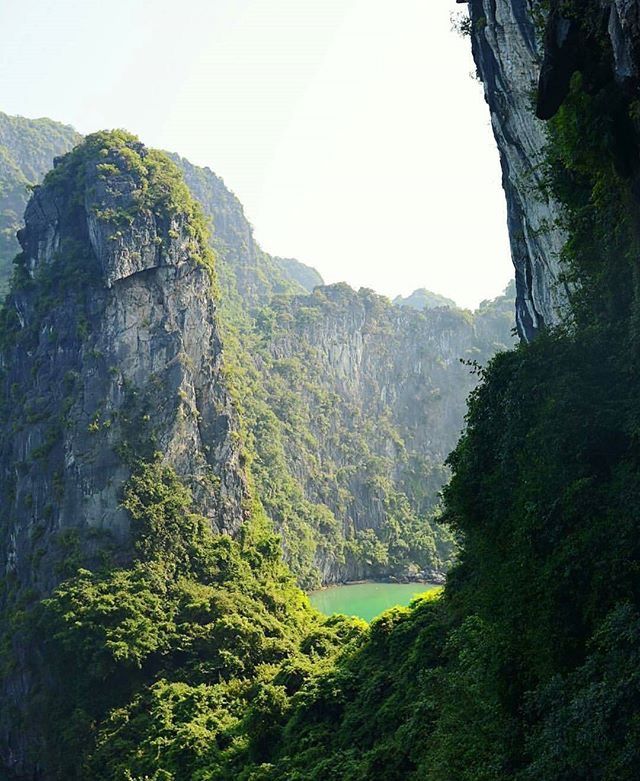
They obliterated the encroaching forces with divine fire and expelled substantial emeralds and jade jewels into the sea. Subsequently, these materials manifested as colossal limestone formations, persisting for millennia and serving as a formidable barrier against prospective adversaries.
In the aftermath of this decisive battle, the Vietnamese achieved triumph and were restored to a state of security and tranquility. Opting to remain on Earth, the Mother Dragon and her progeny committed to safeguarding Vietnam’s sovereignty.


Moreover, the mother of Dragon and her descendants provided invaluable assistance to the burgeoning Vietnamese society by establishing crucial agricultural and husbandry infrastructure.
The dragons chose to reside on distinct islands within Halong Bay, with these islands being named after them.
THE LEGEND OF BAKUNAWA AND THE SEVEN MOONS – PHILIPPINES
(source: https://owlcation.com/humanities/bakunawa-and-the-seven-moons)
Bathala—a supreme being or god— has created seven moons that aims to illuminate the mother earth, with one illuminating each of the dark nights of the week. Every evening was ever so bright and so beautiful because of these moons, as the moons brought joy and happiness to the people of the earth. However, one particular dragon, Bakunawa, fascinated to the moons and wished to have them all.
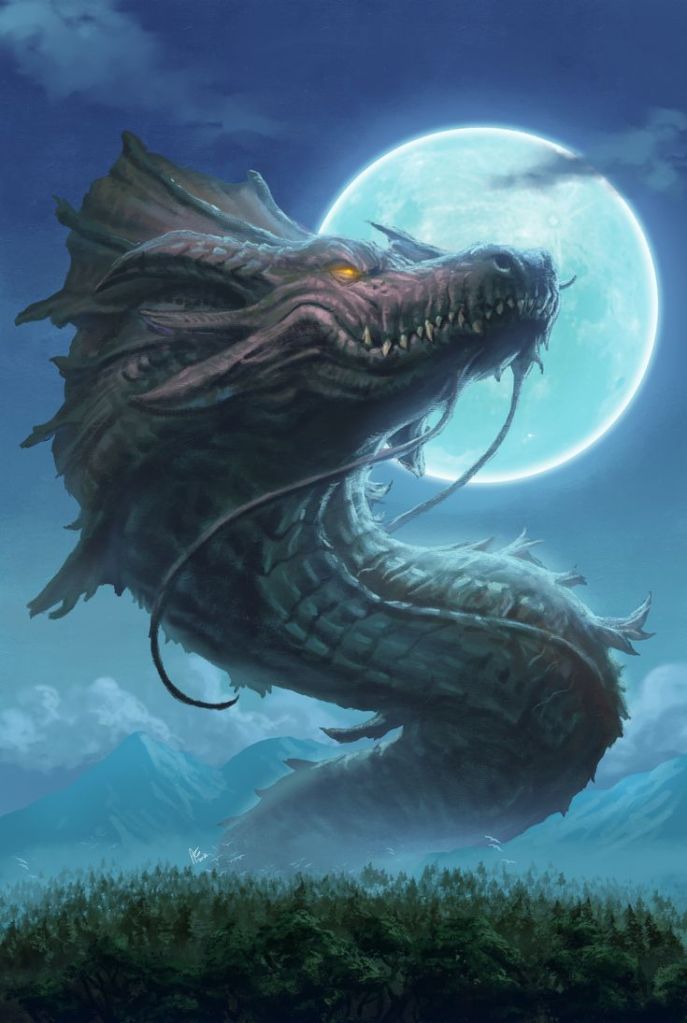
Long ago, but not so long ago that men and gods do not remember, the great gray serpent Bakunawa dragon lived in the eastern ocean. In those days there were seven moons, as brilliant and beautiful as gems on a velvet cloth.
Bakunawa rose from the sea each night to watch them pass over his head; He loved beauty and beautiful things. Each night, he loved the moons a little more. And in time, it came to be that he loved the moons so much that he wanted them for his own.
On a summer night, when the air was still, and the Folk played with the lightning bugs and the moons were bright and full, Bakunawa rose up from the depths and flew up into the sky. He flew higher and higher and grew bigger and bigger until he soared above the sky and could be seen by the whole world like a silvery ribbon.
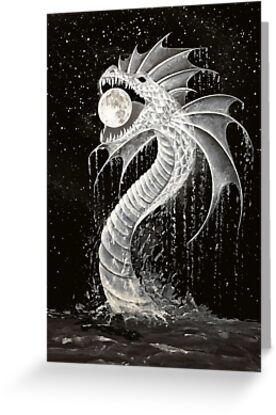
One time, He opened up his great whiskered mouth and GULP! He gobbled up the first moon!
The people below saw all this, and were frightened. They rushed out of their homes into the streets and fields, shouting and stamping their feet and banging on pots and pans, trying to scare Bakunawa away.
But the great gray serpent did not hear them down on the ground, and gobbled up the second moon, and right thereafter the third. This growing yearning turned into envy and greed, so the Bakunawa arose again and again from the waters to swallow the moons. The towering, ferocious dragon successfully devoured all—but one.
The people cried out to the gods, saying “the great Bakunawa is eating the moons one by one and we cannot scare him away!
Come to our aid, O gods of man!”
One fateful night, deafening collective and ever-growing screams, moans, music, sounds, and banging of drums coming from the people of earth awakened the almighty Bathala to witness the Bakunawa in the process of swallowing the last remaining moon. It was slowly enveloping the whole world in deep, abysmal darkness.
The people of earth shouted altogether, they screamed,
“Return our Moon!” among many other unpleasant words.
The dragon, taken aback by the multitude of resistances coming from the people of earth, hastily retreated to his caverns deep within the oceans while the deafening sounds grew louder and louder.
The last moon, now returned to the skies above, illuminated the dark skies once more. The people of earth rejoiced as the dragon hastily returned, hiding inside his caves, waiting for another right moment to gobble the last remaining moon.
To prevent this from happening again, Bathala planted bamboos that looked like “stains” on the surface of the moon from afar. The bamboo trees can be seen as dark spots in the face of the moon.
The dragon never gave up, as he would attempt to swallow the last remaining moon in the sky from time to time. But the people remained on alert if such an incident were to happen again. They would ready to create the thundering noises for the moon’s return, guarding it with their own lives.
And as long as the bamboo trees are not killed on the moon, the dragon will never succeed in his malicious deed.
LEGEND OF BARU KLINTING – INDONESIA
(http://indonesianfolklore.blogspot.com)
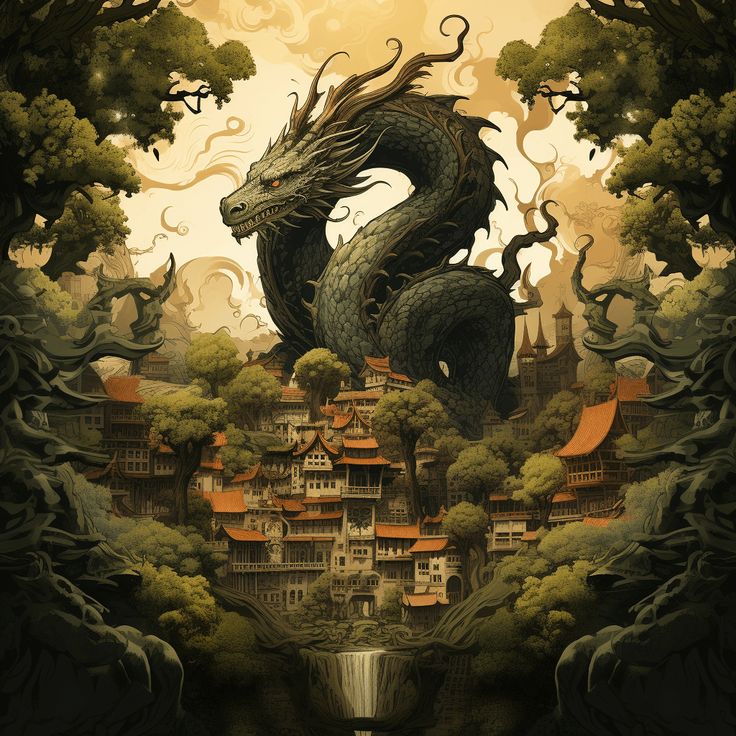
Once upon a time, in a bygone era, a colossal dragon named Baruklinting lived. One day, a deity requested him to take nine shepherds as an offering for the gods.
Subsequently, Baruklinting ascended a mountain, where he opened his enormous mouth daily, aspiring for the shepherds to enter to his big mouth.
In the village, ten shepherds led their cows to the mountain’s grassy field, oblivious to the dragon’s presence. One of the shepherds was very skinny and dirty. His companions always mocked at him, yet the thin shepherd remained calm and never got angry. He chose to stay silent and distanced himself from his friends whenever they laughed at him.
On an exceedingly hot day, all the shepherds felt extreme fatigue. They sought refuge in a cooler spot to rest. The slender shepherd had already discovered a pleasant location beneath a large tree, where the cool shade alleviated the heat. Observing this, his friends harbored envy.
“Let’s claim his spot,” suggested one of them.
“Absolutely! Let’s do it!” concurred the other shepherds.
They gathered some mud and flung it at the slender shepherd. Although deeply saddened, he refrained from expressing anger and simply distanced himself from them, walking away.
“Ha ha ha. Leave now! You skinny boy!” they taunted him with laughter.
Abruptly, the sky darkened, accompanied by thunder and lightning. The heavy rain began to fall. The shepherds, unwilling to endure the downpour, sought refuge and eventually discovered a sizable cave.
Unbeknownst to them, this cave was, in fact, the gigantic mouth of Baruklinting, the dragon. As all the shepherds took shelter inside, an unexpected turn of events unfolded.
Within the ‘cave,’ one of the shepherds forcefully shoved the slender shepherd away.
“Get out! This space is only for the big boys!”
“But it’s raining outside,” protested the skinny shepherd.
“I don’t care!” retorted the others, pushing him out despite the inclement weather.
Immediately after the skinny shepherd found himself outside the cave, it abruptly sealed shut. Baruklinting had successfully completed his task of gathering nine shepherds as an offering for the gods.
Upon witnessing the closure of the cave, the slender shepherd wasted no time and sprinted away at top speed.
He urgently informed the villagers about the cave and the dragon. In response, the villagers rallied and headed to the mountain with the intent to slay the dragon.
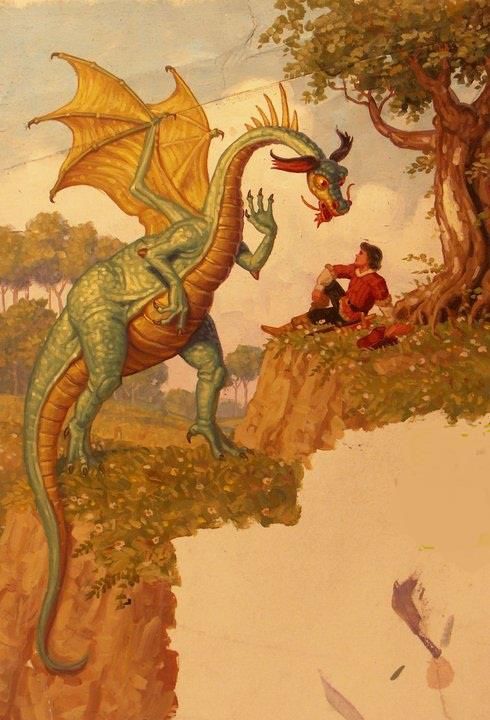
However, upon their arrival, they discovered that the dragon had already departed.
Henceforth, the village became known as Kesongo Village, with “Songo” signifying nine in remembrance of the nine shepherds consumed by the Baruklinting Dragon.
–ENDS–
THE SEA FOLKLORE
 SEA Folklore
Leave a comment