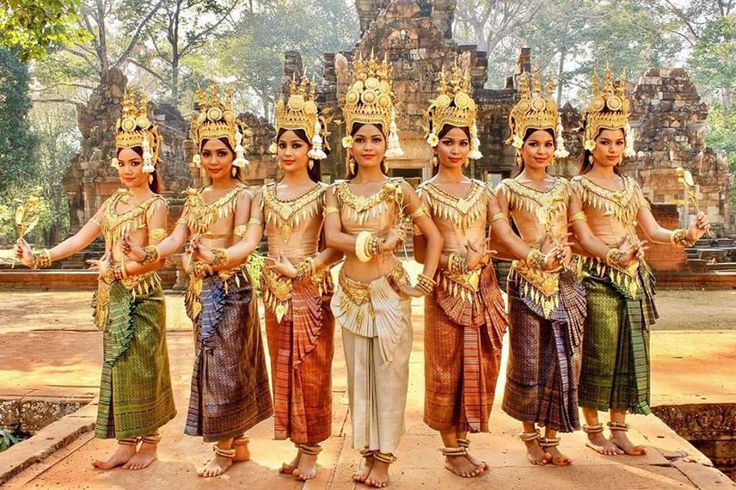
The Apsara Dance, a celebrated folk dance within the Cambodian community, stands as a living testament to the nation’s rich cultural tapestry. Far surpassing a mere performance, this traditional dance transcends generations, embodying an eloquent convergence of history, heritage, and artistry.
The roots of the Apsara dance delve deep into Cambodian mythology. According to this mythology, the Apsaras were envisioned as exquisite celestial maidens who descended from heaven to entertain gods or kings with their enchanting dance, and it giving rise to the captivating art folk dance known as the Apsara Dance.
Tracing the Roots
The Apsara Dance draws its inspiration from the intricate postures and nuanced movements of the dancers, reminiscent of the elaborate carvings that pay homage to ancient memories, particularly those showcased in historical temples like Angkor Wat.
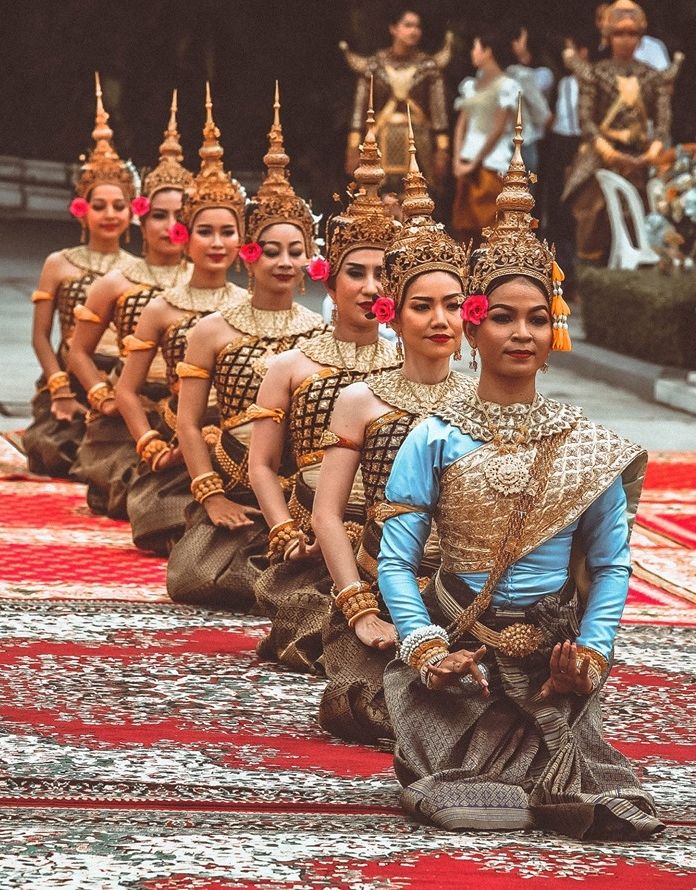
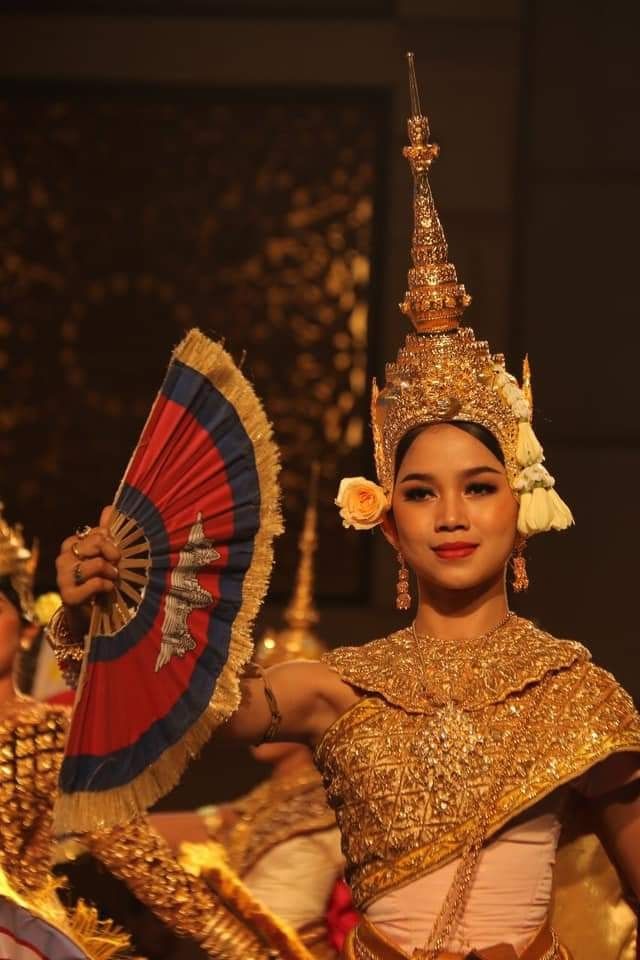
Adorned in silk tunics and golden floral headdresses, resembling the mythological Apsara figures depicted in reliefs, the dance echoes the bygone eras of the ancient Kingdom. This nomenclature serves that the Apsara highlights the profound connection with the Cambodia’s illustrious past.
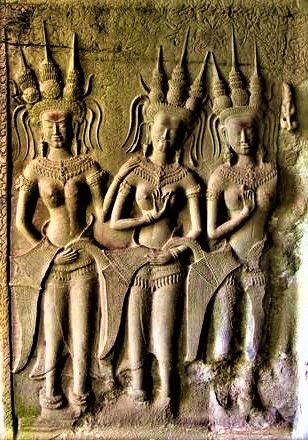
Functioning as a vibrant narrative medium, the Apsara Dance eloquently communicates the chronicles, traditions, and values that have left an indelible mark on Cambodia throughout the ages.
The roots of this dance extended back to the earliest periods of Cambodian history. Some asserting its existence in the 6th and 7th centuries, while others claim its initiation back in the 8th century.
Many believe the dance reached its pinnacle during the renowned reign of King Jayavarman VII in the 12th century, marked by the performances involving around 3000 Apsara dancers at the Royal Court to entertain the King and Royal Family.
During the Khmer Rouge regime, the Apsara Dance faced adversity with oppressive policies threatening Cambodian’s traditions and profound knowledge. However, following the fall of the Khmer Rouge, Princess Sisowath Kossamak revitalized the Apsara Dance for the Royal Cambodian Ballet.
The legacy then passed on to her granddaughter, Princess Norodom Buppha Devi, who had the opportunity to showcase the Apsara Dance across the world. Renowned for its intricate movements, ornate costumes and headpieces, and the distinctive stories embedded in every gesture, the Apsara Dance has since widely recognized as a critical part of Cambodia’s identity.
Exploring Apsara: The Technique
The Apsara Dance transcends beyond a sequence of choreographed intricate movements. It represents the culmination of years of rigorous practice. That is the reason that the journey of a Apsara dancer normally begins at year of 6 purposefully to cultivate the flexibility and strength necessary for the Apsara dance.
The earlier journey of Apsara dancer coupled with the need for a deep internalization of the meanings embedded in each movement, ensuring the embodiment of the very essence of the tales it portrays.
Kbach – Hand gesture:
At the heart of the Apsara dance eloquence are the intricate hand gestures known as Kbach. With over 1,500 precise hand gestures, each Kbach possess distinctive meanings, narrating tales of Cambodian folklore, myths, and life.
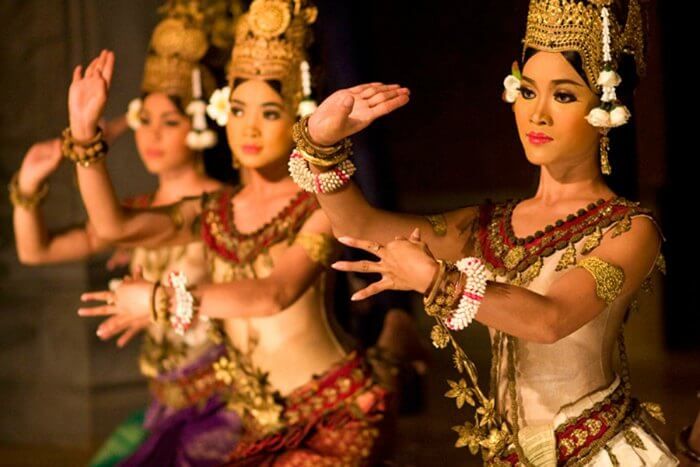
While some gestures may appear similar, the vast subtleties and nuances result in varied interpretations.
For instance, a simple one-handed gesture in Apsara dance may signify a flower or lotus. But, when it combined with the other hand in a precise position, it transforms into different meaning, which is the act of picking a flower. Adding body positions to the said hand gestures creates entirely different meanings, such as conveying shyness, laughter, love, sadness, and more.
From the delicate curl of a finger representing a leaf, to a palm-outward gesture signifying the picking of a lotus, the profundity of Kbach is evident.
Foot-steps:
Complementing the expressive hand movements is the meticulously refined footwork. Each step and weight shift contribute to maintaining the dancer’s poise and balance, lending a surreal, floating quality to the performance.
The Apsara dance’s footwork goes beyond mere transitions. It emphasize the purposeful and intentional nature of every movement.
Postures:
The Apsara dance postures, including the arch of the back, the tilt of the head, and the angle of the wrist, convey stories frozen in fleeting moments.
Holding some of these poses demands immense strength and flexibility, challenging the perceived effortless grace observed by the audience.
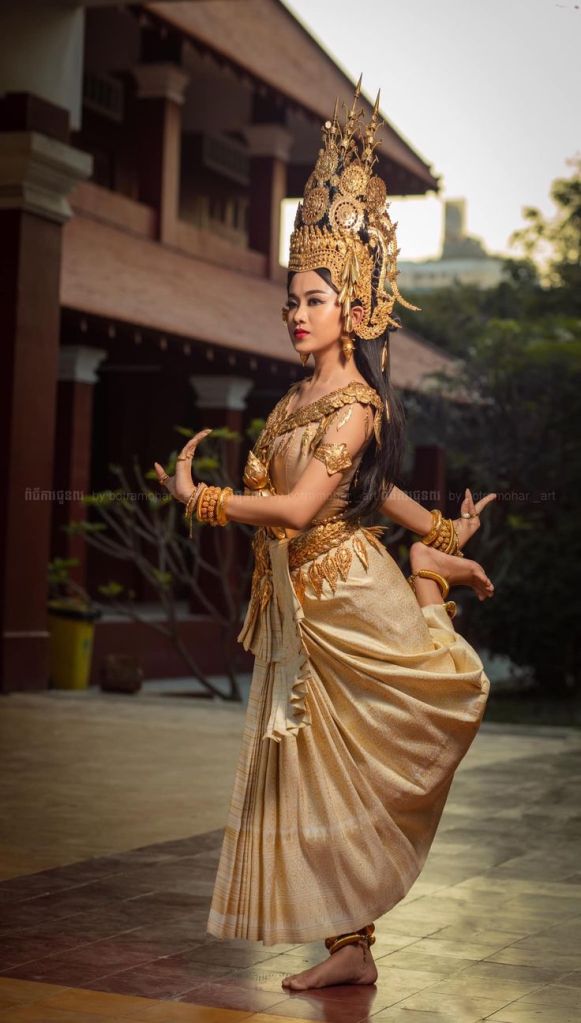
THE APSARA DANCE
Apsara dance is typically performed by five or seven females, who are dressed in silk drapery known as ‘Sampot Sarabap’ and are adorned with shimmering golden headdresses, bracelets, and anklets.
The role of each dancer is distinguished by the tips or points of the headpiece, with the lead dancer’s headdress featuring five points and two rows of spherical decorations, echoing the bas-reliefs at Angkor Wat.
Subordinate dancers have headdresses with three tips and one row of spherical decorations. Beyond the exquisite silk attire and crowns, the Apsara dancers wear four types of wrist jewelry and two types of golden anklets, symbolizing the opulence of the Khmer Empire.
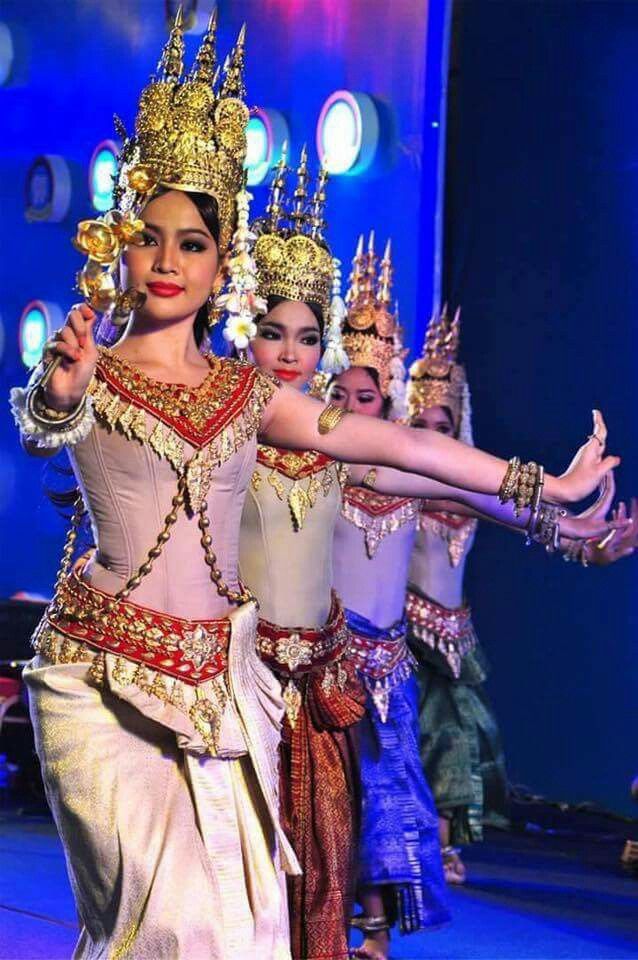
The Cambodian Apsara dance boasts a uniquely stunning style, characterized by elegant and modest movements that exhibit agility simultaneously. The dance requires mastery of graceful arm movements, fingers curved backward, intricate footwork of the bent knees and toes flexed upward, a supple spine, and fluid motions with precise balance and aura of divine grace. The motions of Apsara dance follows the harmony of stories, rhythm and timing.
Tailored to the narratives, and essentially inspired by the grace of female deities and nature subtleties, the Apsara dance mirrors the gestures of flowers, Mother Earth and various creatures. It incorporates characteristic motions such as blossoming, flying, walking and more. The dancers must have a deep understanding of the natural world to perform the dance.
Accompanied by a Khmer ensemble consisting of wind and percussion instruments, the dance is elevated to a storytelling art-form. While each Apsara dance, nowadays, depending on its narratives, has distinct songs, there are recurring motifs in every composition, portraying entrances, exits, and characteristic movements, enriching the overall cultural experience.
Apsara Dance Costume
The Apsara Dance, while deeply entrenched in movement and narrative, is adorned with attire characterized by vivid colors and intricate designs that symbolize stories, myths, and cultural pivotal to Cambodian culture.
The costume is typically the vibrant silk fabric, where each color holds profound meaning.
Gold, often dominant, symbolizes prosperity and divinity, reflecting the celestial nature of Apsaras. Blue conveys depth and tranquility, while green, prominent in the portrayal of celestial nymphs, represents nature and life.
Embellished onto these fabrics are intricate patterns portraying images from Cambodian life and lore. The designs often feature nature, including the graceful lotus, a symbol of purity and rebirth, and majestic birds in flight, symbolizing freedom and ascent of the spirit.
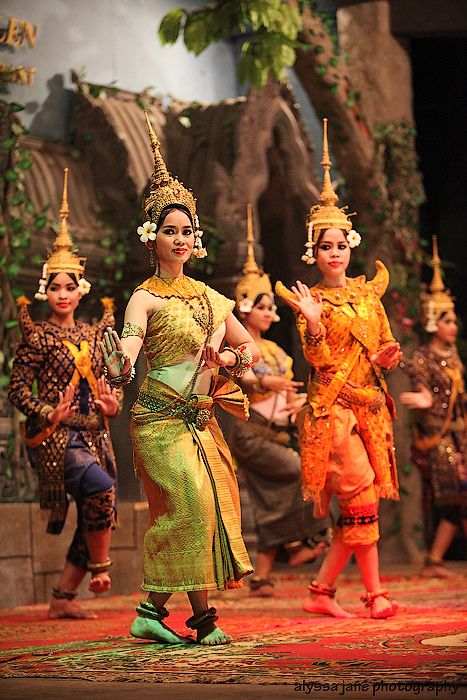
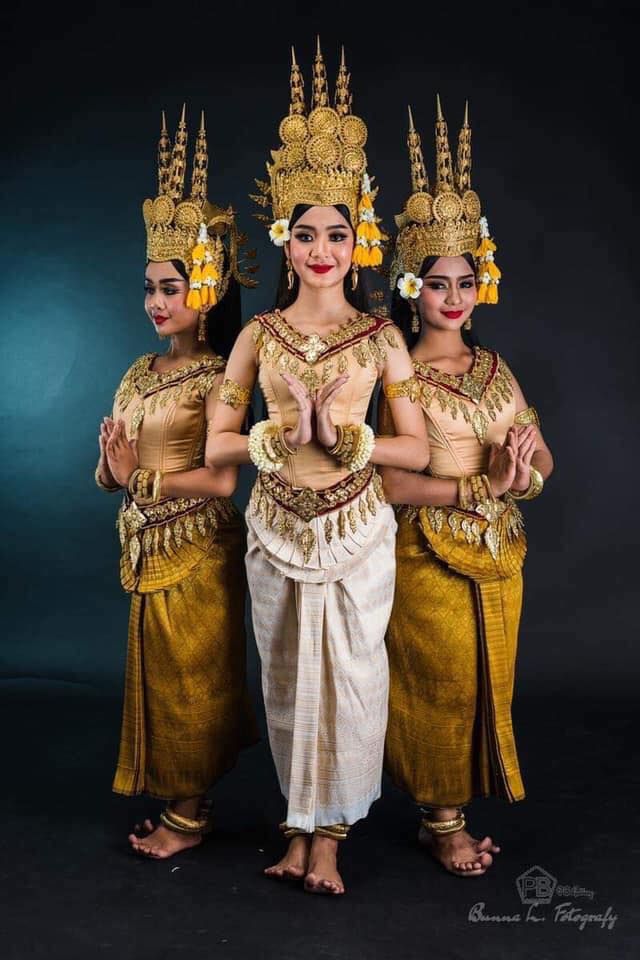
The costumes are further adorned with an array of jewelry, each piece carrying more than just ornamental value. Necklaces, bangles, and anklets often incorporate designs rooted in Cambodian mythology.
The elaborate headdress, known as ‘Krama,’ stands out as a masterpiece. Crafted from gold or gold-colored materials, the headdress is intricately decorated with motifs and sometimes depicts scenes from the Ramayana. Its crown-like structure enhances the dancer’s regal and divine portrayal, serving as a visual reminder that Apsaras are essentially celestial beings.
The costume narrates its own tale, representing a harmonious fusion of artistry, tradition, and symbolism, offering a visual showcase of Cambodia’s cultural richness.
In today’s world where cultural identities and traditions often fade into obscurity, the Apsara Dance highlights the cultural art’s resilience and perseverance to transcend time. It is a testament that the folk dance serves as a pivotal medium of fostering communal bonds and communication across generations, ensuring the preservation of cultural heritage and identity.
It is truly remarkable to learn that the Apsara Dance proudly evident as both a symbol of its profound cultural heritage and Cambodia’s national identity.
The Apsara dance, nowadays, is being regularly performed in various formal receptions and programs, including celebrations and tourist attractions, highlighting its profound integration into Cambodian society.
Watch the beauty of Apsara Dance of Cambodia:
All photo materials, and videos, have been sourced from various credited resources. The content is solely intended for educational purposes and not for commercial uses.
 SEA Folklore
Leave a comment